Sauerkraut
INGREDIENTS
One cabbage (green or red)
Salt 1-2 tablespoons per kg cabbage
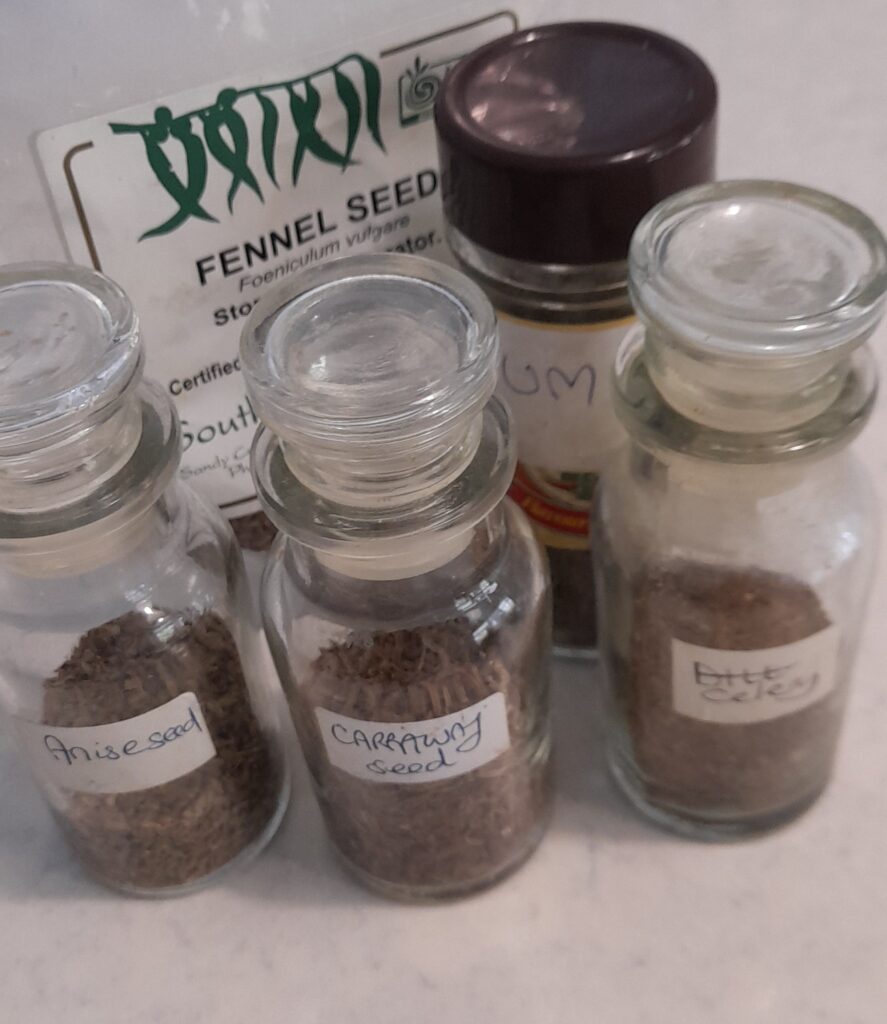
Seed Spices as desired – 1-2 tablespoons carraway, cumin, aniseed, celery, fennel, mustard
Other spices as desired – turmeric, chilli etc
Several clean jars to ferment and store sauerkraut, large bowls. (One kg of cabbage needs about 3 medium sized jars)
Cut cabbage into manageable pieces. Discard the older outer leaves and tough core.
Weigh the remainder.
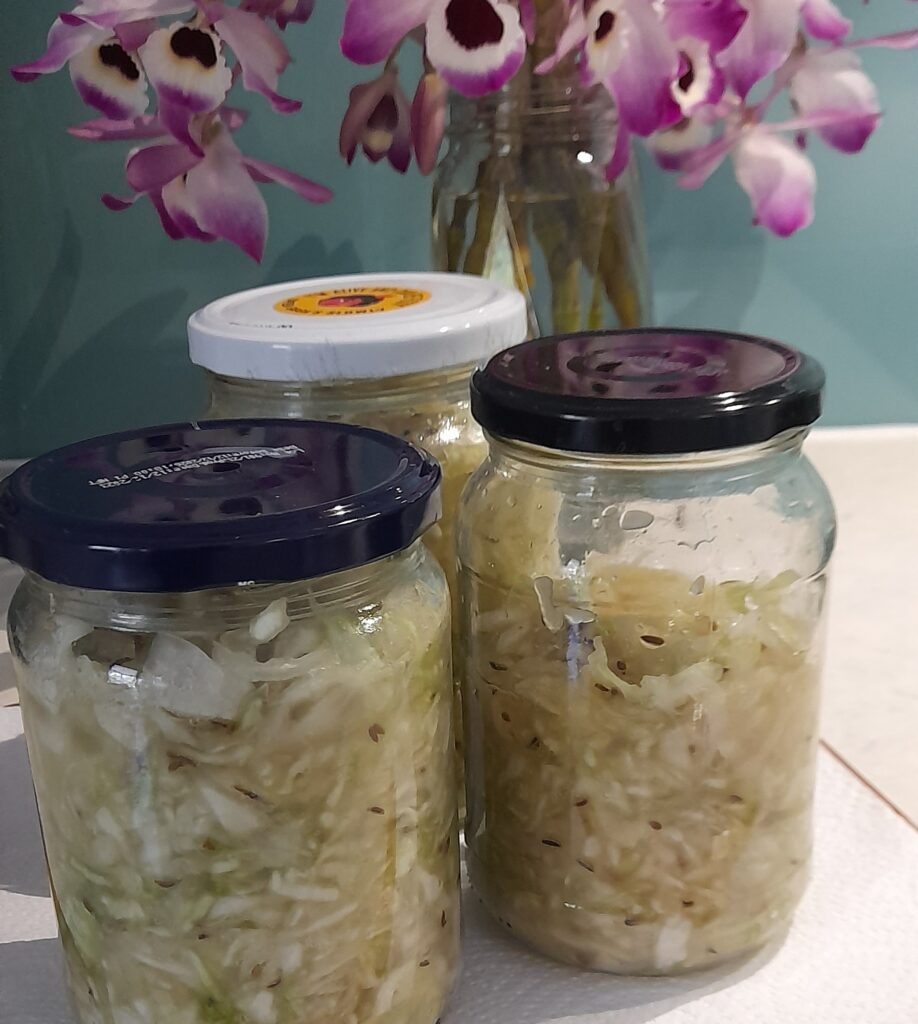
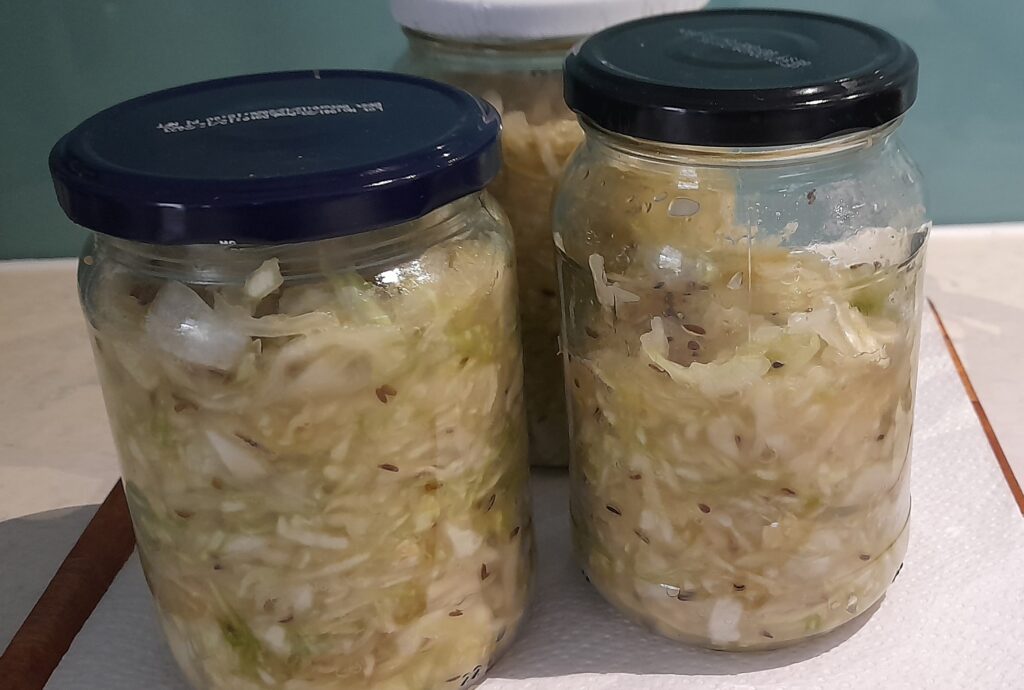
METHOD:
1. Finely slice all the cabbage discarding any chunky tough core pieces.
I like slicing to lengths of about 2-3cms but of course this will vary. Keeping the slices roughly the same size helps with evenness of fermentation. I have used a food processor grater to speed up the process but found that the slices were too small for my liking and the sauerkraut lost some of chewy texture and became more of a ‘mush’. But, all to their own, you may find a device to make your life a bit easier!
2. Add salt (to taste) or approximately 1 – 2 tablespoons per kilo of cabbage.
Start at the lower end so you can add more if required. Add similar amount of spices. Fennel seed and aniseed confer a lovely sweet aroma and flavour. Carraway, cumin, celery and mustard give a more pungent effect.
3. Massage the mix with your hands or pound with the end of a rolling pin or other object to squash the cabbage.
Over 10 mins or so, the cabbage will begin to wilt and exude fluid. Keep massaging until cabbage is medium soft. Taste then add more salt or spices if required. Some people cover the bowl with a tea towel and leave overnight without all the massaging.
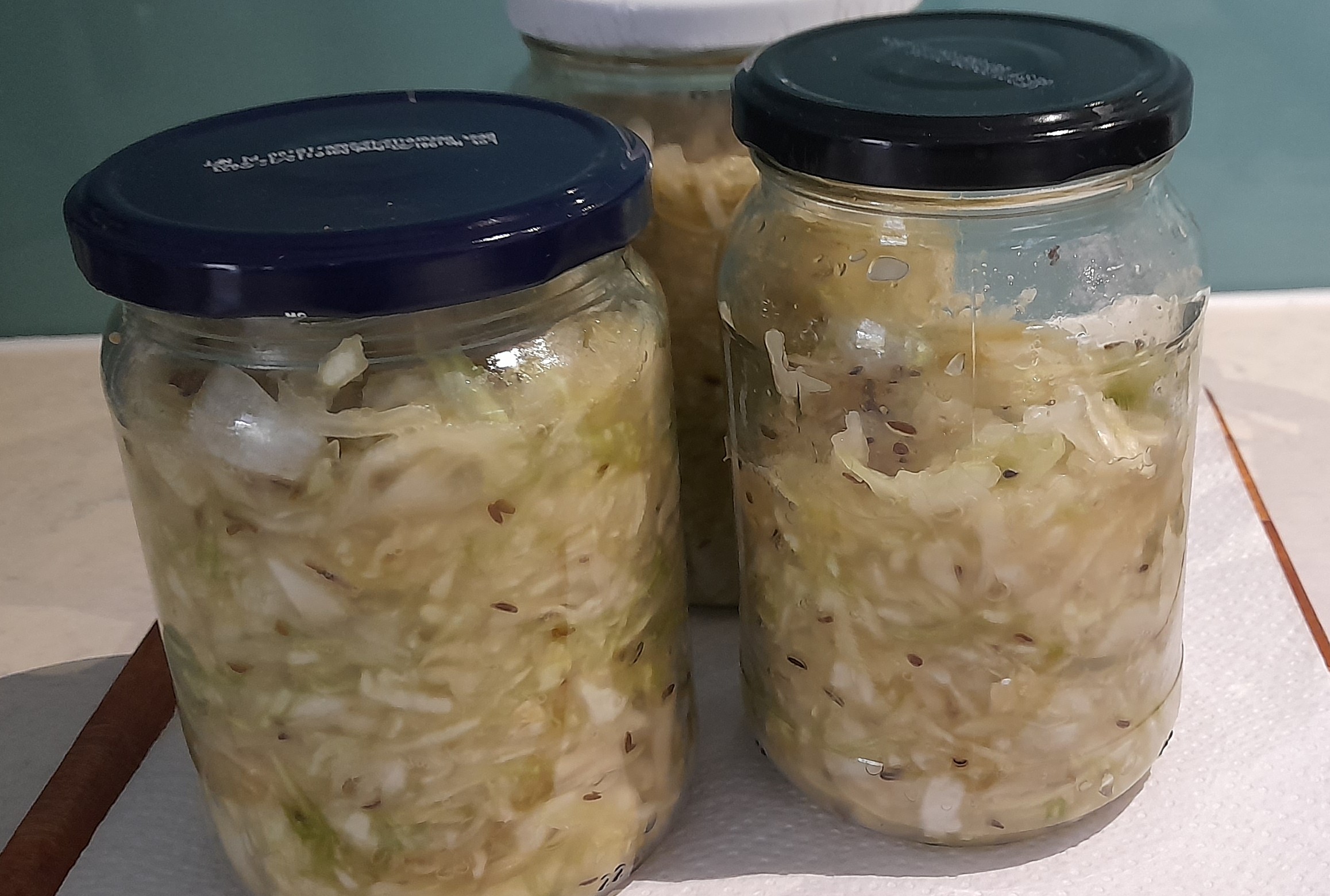
4. Strongly press cabbage into cleaned jars making sure there are no air bubbles left.
Leave 1-2cms between the lid and the cabbage to allow for the cabbage bubbling up as it ferments.
5. Place the jars on paper towel on a plate (catches over spill of fluid) on the kitchen bench or a slightly warmer spot (not direct sunshine) to hasten the fermentation.
Open jars daily to ‘burp’ the fermenting brew. Taste as you go. Depending on environmental temperatures it often takes about 3 to 5 days for sufficient fermentation. Be guided by taste.
6. Store in fridge (this stops the fermentation).
The sauerkraut last for months in the fridge, but usually gets eaten prior.
USES
I use sauerkraut in many ways.
I include it in a salad, sandwich, as a side dish with any meal, in frittatas, at the end of a stir fry and so on.
It’s best eaten uncooked as heating will diminish the good bacteria that have been cultured and nurtured in the ferment.
These good bacteria help with your digestion by: improving the acid production in your stomach, stimulating saliva (with the sour/sweet complex flavours) AND helps the balance in your microbiome all through your gut.
A balanced microbiome helps to reduce inflammation in your body – so helps with all chronic diseases like arthritis, pain, depression, anxiety, cancers, cardiovascular disease, thyroid issues and so on.
It’s a pretty big health result for quite a small investment in time and energy.