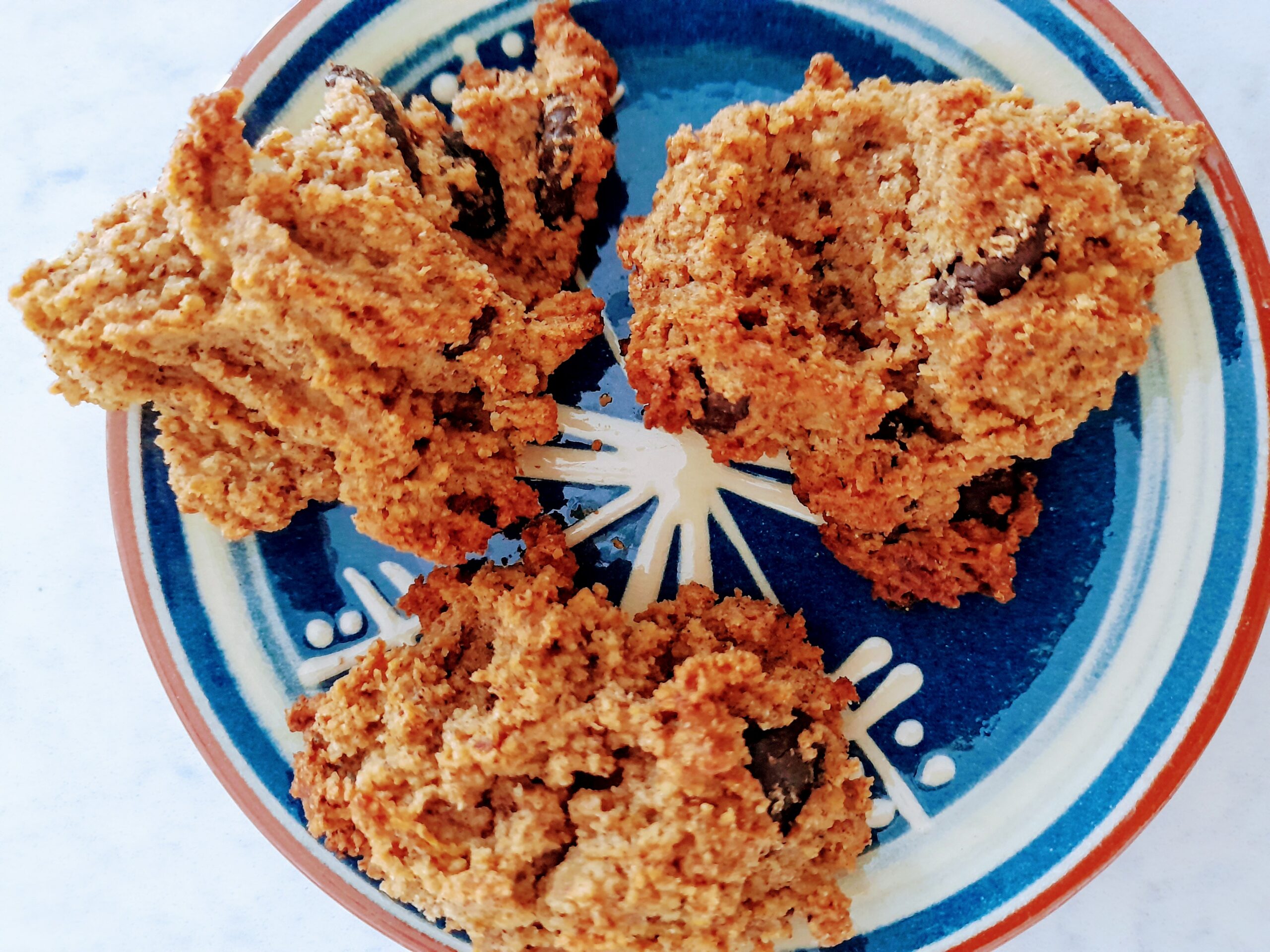
Chickpea cookies
| | |

High protein cookies (a little sweetness)

I’m always on the prowl to include novel ways of including protein and fibre at each meal (or in between for the occasional snack). These cookies are very filling and satisfying.

Healthy gut = healthy you!

I’ve tweaked this one to my satisfaction, improving the flavour with zesty lemon rind and juice. I love that the main ingredient is whole chickpeas. You can use tinned or cook them yourself. Some folks like to retain (and freeze or refrigerate) the chickpea liquid to use as egg white substitute in baking. High in protein and fibre and minerals, chickpeas are part of the legume/pea family which your gut microbiome loves to feed on.

It’s the good bugs in your microbiome that break your food down to produce hundreds of super charged substances to keep you well – from anti-inflammatory chemicals to anticancer and hormonal balancing chemicals.

In addition a variety of nuts and seeds as flours and butters in this recipe helps ensure further fibre and minerals and tastes great. Flaxseeds freshly ground act as a phyto-oestrogen, thus helping support your hormonal system whatever gender you are. Regular ingestion of 2 tablespoons can help with hot flushes of perimenopause and general gut health.

The recipe:

420g can chickpeas, rinsed and drained (or liquid retained for future)

1/2 cup smooth nut butter

2 tbs maple syrup

1tsp vanilla essence

1 cup mixed almond/hazelnut meal or 1/cup each nut meal and ground flaxseed

rind and juice one lemon

1/2 tsp bicarb soda

1/2 tsp baking powder

1/2 cup dark chocolate pumpkin seeds

Method: Oven 180deg C/160C fan forced

Mix in food processor chickpeas, nut butter, maple syrup, vanilla and lemon juice and rind.

In a bowl mix all the dry ingredients, then add chickpea mix.

Place spoonfuls on cookie tray. Makes about 15 cookies. Into oven for 20 to 30 mins or until brownish on outside. Texture and taste improves when cold. Enjoy!
Similar Posts

  • First world country – third world Iodine levels

    “Iodine is the single biggest nutrient deficiency in Australia” – Dr Mark Donehoe. Dr Donehoe’s  recent podcast highlights that up to 30% of the Australian population is at risk of iodine deficiency. That’s a surprisingly high figure for a developed country. Australian endocrinologist Creswell Eastman is renowned for his work on IDD (Iodine Deficiency Disorder) in…

  • Why come back to see me?

    After a period of treatment, I often suggest people come and pick up remedies without a consultation as we know we are on the correct path and just require consolidation. However best practice requires that I see you at least once every 6 –  12 months. This is because: your life circumstances change and bring new challenges and…

  • Prepare to manage LONG COVID

    COVID is a thoroughly nasty bug, causing inflammation everywhere from the brain to the gut. If you’re unlucky enough to end up with LONG COVID, there’s a whole raft of symptoms you could be experiencing – WITHOUT knowing that your problems are a result of COVID. Some of these are: And if you have these…

  • | | |

    Negotiating the pharmaceutical roller coaster

    I have been noticing that there is a ‘creep’ phenomenon happening in regards to medical drug use as we age. One drug may lead to the next. Often this is to offset the side effects of a certain medication and this in turn may trigger further, different disease states. This is termed ‘Polypharmacy’. This is…

  • |

    Partners in touch – connection and communication

    I’ve been working in CAM (complementary and alternative medicine) for many years, and one powerful healing modality I use is massage.  I find that teaching massage is enormous fun as just a little know-how and technique delivers a whole new experience. I’ve been running various Massage classes since 1992, and Massage for Couples (mostly at…