Take control of your muesli
(Fruit-free variation with cacao and cardomon added Sept 2024)
You never know what’s in packaged muesli, but you can get an idea by reading the label. Once you start reading labels, it’s scary just how high the sugar levels are. In one packet I saw recently there were 13 grams of sugar in a single 100g serve of muesli – that’s 4 teaspoons of sugar!
When you buy commercial muesli – or other cereals – they may not be all that healthy.
If in doubt, take control
Lots of things are hard to make at home – but natural muesli ISN’T one of them.
It’s VERY easy to make natural muesli, and you get a breakfast full of flavour and crunch for very little effort. So why not make your own healthy version?
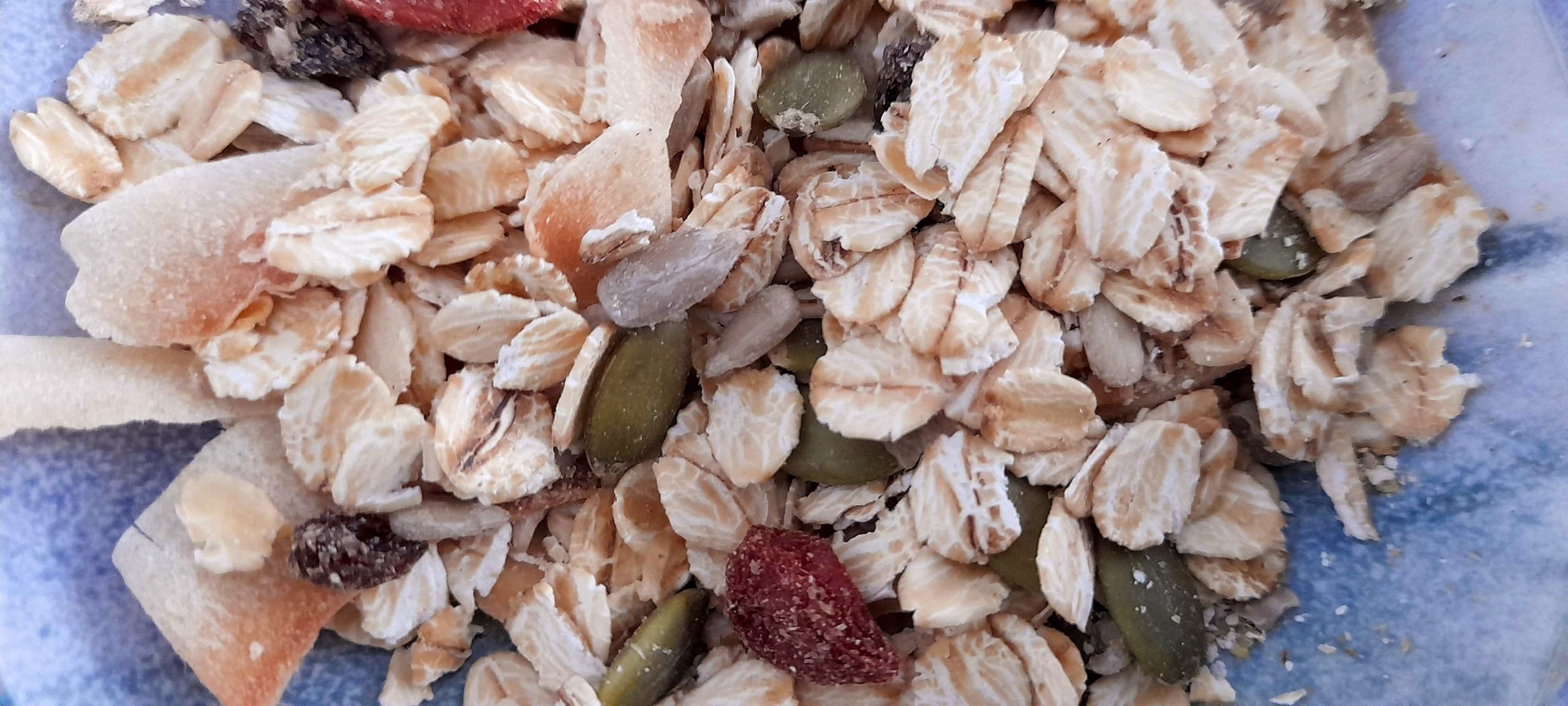
My muesli – just add hot water for porridge
This recipe just takes a cup measure and a bit of shaking. It lasts 2 adults for a month, eaten twice a week in half-cup serves.
Ingredients
3 cups of rolled oats, steel cut are best
3/4 cup oat bran
1 cup rolled quinoa
1/3 cup sunflower seeds
1/3 cup chia seeds
1/3 cup pumpkin seeds (try The Pumpkin Seed Co. near Myrtleford, Vic for the best)
1/3 cup coconut chips
1/3 cup linseeds (ground if you’re over 50 for extra phyto-oestrogen value); for freshness best to grind yourself using a coffee/spice grinder, then keep in fridge
1/3 cup slivered almonds
1/3 cup chopped walnuts/pecans
1/3 cup sultanas/currants
1/3 cup goji berries
1 – 2 dessertspoons cinnamon and/cardamon powder or other spices to taste
Method
- Measure ingredients into a 3 litre container.
- Shake to combine.
- Ideally take 1/2 cup and soak overnight in some water, then if cold weather make into a warm porridge with some fresh berries or grated apple on top or in warm weather add some non sugar yoghurt/kefir and some fresh fruit just before eating.
Cacao and cardamon – spice to add brekkie variety
This variation – from a foodie friend – cuts out the fruit, without losing flavour.
INGREDIENT NOTE: You don’t have to hull cardamon pods yourself – just find a good Indian/Asian grocer. Some health food stores also stock them.
Ingredients
3 cups of rolled oats
3/4 cup oat bran
1 cup rolled quinoa flakes
1/3 cup sunflower seeds
1/3 cup chia seeds
1/3 cup pumpkin seeds
1/3 cup coconut chips
1/3 cup linseeds (ground if you’re over 50)
1/3 cup slivered almonds
2/3 cup chopped walnuts
1/3 cup cacao nibs
1 tbspn podded cardamon seeds
Method
- Measure ingredients into a 3 litre container.
- Shake to combine.