Minimise your glucose spikes to maximise your health
We’re learning more every day about just how bad big glucose spikes are for everyone’s bodies – AND not just for diabetics. There’s increasing evidence that sugar and highly processed carbohydrates are also associated with inflammatory problems like arthritis, sleep disruption, cardiac issues, cancers and increased menopausal symptoms.
It’s really easy to get overloaded with the science of glucose overload and all the “shoulds” coming out of those findings – but it’s not always easy to find information sources that are understandable AND have practical strategies.
One source that I like is Jessie Inchauspé’s presentation of glucose spike management strategies – easy to read, easy to understand AND a lot easier to actually DO than some “should lists”.
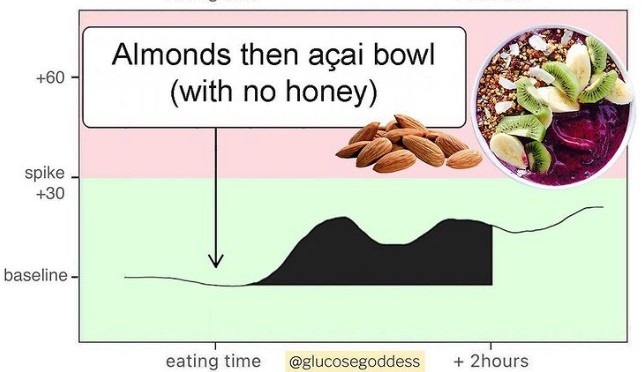
Jessie’s work on glucose spikes started from her own health concerns – then got helped along enormously when she started using a continuous glucose monitor. This is the sort of discovery she made about how her body processed glucose.
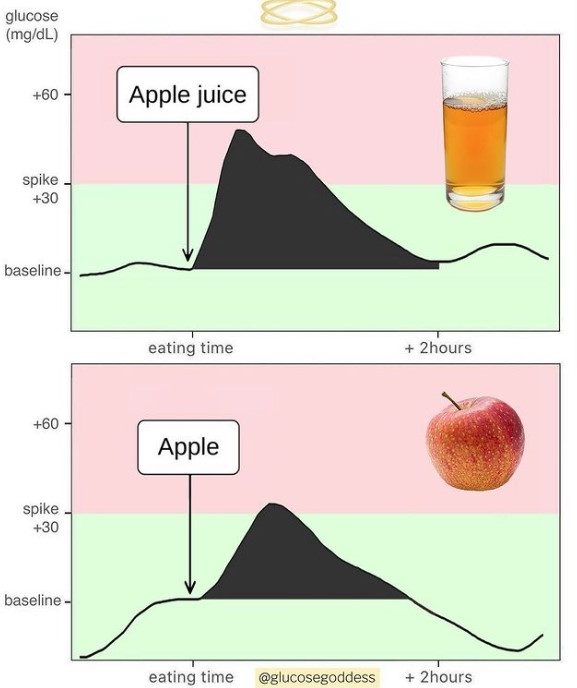
There are some great resources on the Glucose Goddess website, including:
- A section on the science behind her recommendations https://www.glucosegoddess.com/science
- A meal planning process – so you have the information you need to actually make her approach work for you: https://www.glucosegoddess.com/meal-plan
Not everyone agrees with ALL the claims Jessie makes – for example whether it can help PCOS. As a Naturopath I think this IS a very helpful suggestion as part of a comprehensive strategy. Some people worry that in a world where food management is becoming obsessive, some people will get overly hung up on her “hacks”. Used with guidance and support from a professional health practitioner these hacks can be utilized to enhance your well being on many levels.
Jessie’s how-to information is well worth exploring – if only for new breakfast ideas.
I love her motto “put clothes on your carbs” – a reminder not to eat carbs on their own. Repeat it to yourself a few times to embed it in your memory! It means, for example, that when you eat bread (carb), clothe it with a protein or fat like avocado, cheese or almond butter rather than jam or honey (more carbs). This helps calm the glucose spike you’d othewise get.